

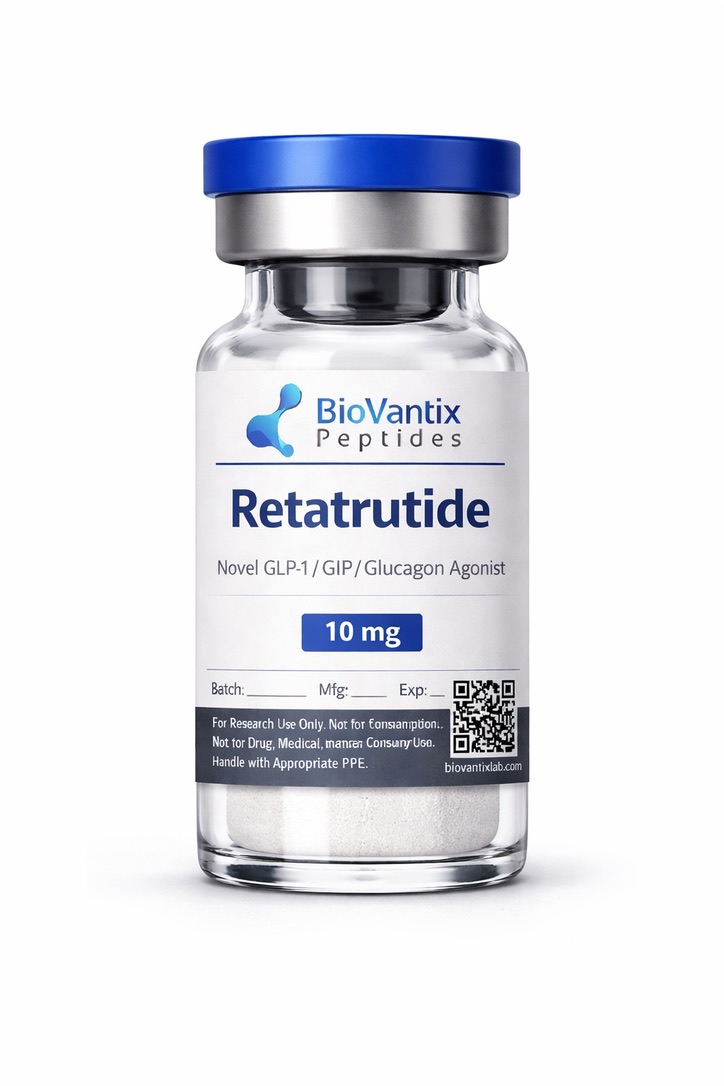
Retatrutide 10MG
Retatrutide is a synthetic multi-agonist peptide studied in experimental models for its interaction with metabolic signaling pathways, including receptors associated with GLP-1, GIP, and glucagon. In preclinical and clinical research settings, retatrutide has been investigated for its potential effects on energy balance, glucose metabolism, and body weight regulation through the modulation of hormone-mediated metabolic signaling. Current research examines how this peptide may influence pathways involved in appetite regulation, insulin sensitivity, and lipid metabolism under controlled experimental conditions.
For research use only. Not for human consumption.
$144.00 Original price was: $144.00.$129.00Current price is: $129.00.
Availability: 324 in stock
All Peptides
Popular Peptides
Peptide Blends
Retatrutida: General Overview
Retatrutida is a peptide under investigation for weekly administration, studied in the context of metabolic research, especially obesity and type 2 diabetes. It is commonly described as a triple agonist of hormone receptors because it activates the receptors for GIP, GLP-1 and glucagon. In phase 2 obesity research, retatrutida produced dose-dependent weight reduction, with the highest dose tested showing an average body weight reduction of up to 24.2% at 48 weeks.
Retatrutida: Biochemical Characteristics
Retatrutida, also known as LY3437943, is designed to act on three incretin/metabolic signaling pathways: GLP-1 receptor activity, GIP receptor activity, and glucagon receptor activity. This distinguishes it from semaglutide, which targets GLP-1, and from tirzepatide, which targets GIP and GLP-1. The triple agonist framework is designed to influence appetite regulation, glucose management, insulin-related signaling, and energy expenditure biology.
Retatrutida: Research Applications
Research applications focus on:
Obesity models and weight management
Type 2 diabetes models and glycemic control
Body composition research
Energy balance studies and metabolic rate
Incretin and glucagon receptor signaling
In a phase 2 diabetes trial, retatrutida reduced HbA1c and body weight compared to placebo and dulaglutide in people with type 2 diabetes.
Retatrutida: Pathway / Mechanism Context
The mechanistic rationale for retatrutida is based on coordinated metabolic signaling. GLP-1 receptor activation is associated with appetite reduction, delayed gastric emptying, and glucose-dependent insulin secretion. GIP receptor activity may contribute to insulinotropic and adipose tissue-related metabolic effects. Glucagon receptor activity may promote energy expenditure and hepatic metabolic signaling.
The central research hypothesis is that combining these three pathways in a single molecule could produce stronger metabolic effects than targeting one or two incretin pathways separately. For this reason, retatrutida is frequently discussed as a next-generation incretin-based candidate, rather than a simple GLP-1 analog.
Retatrutida: Preclinical / Clinical Research Summary
The strongest published evidence currently comes from phase 2 trials in humans. In obesity research, retatrutida showed substantial dose-dependent body weight reduction over 48 weeks. In type 2 diabetes research, it improved glycemic and weight-related outcomes compared to placebo and an active comparator.
A 2025 body composition analysis reported that retatrutida significantly improved total fat mass reduction in adults with type 2 diabetes, while the proportion of lean mass loss relative to total weight loss was described as similar to other obesity treatments.
Retatrutida: Presentation and Analysis
This research educational page addresses published literature and the mechanistic rationale for retatrutida. Analytical characterization for any specific research material would normally focus on identity, purity, and composition using methods such as HPLC, LC-MS, or other related laboratory assays. Any batch-specific COA (certificate of analysis) should be reviewed directly.
Compliance Note
Retatrutida remains a product under investigation and is not FDA-approved for general clinical use. Research materials should not be presented as drugs, approved medications, or treatments unless they have the corresponding regulatory approval.