

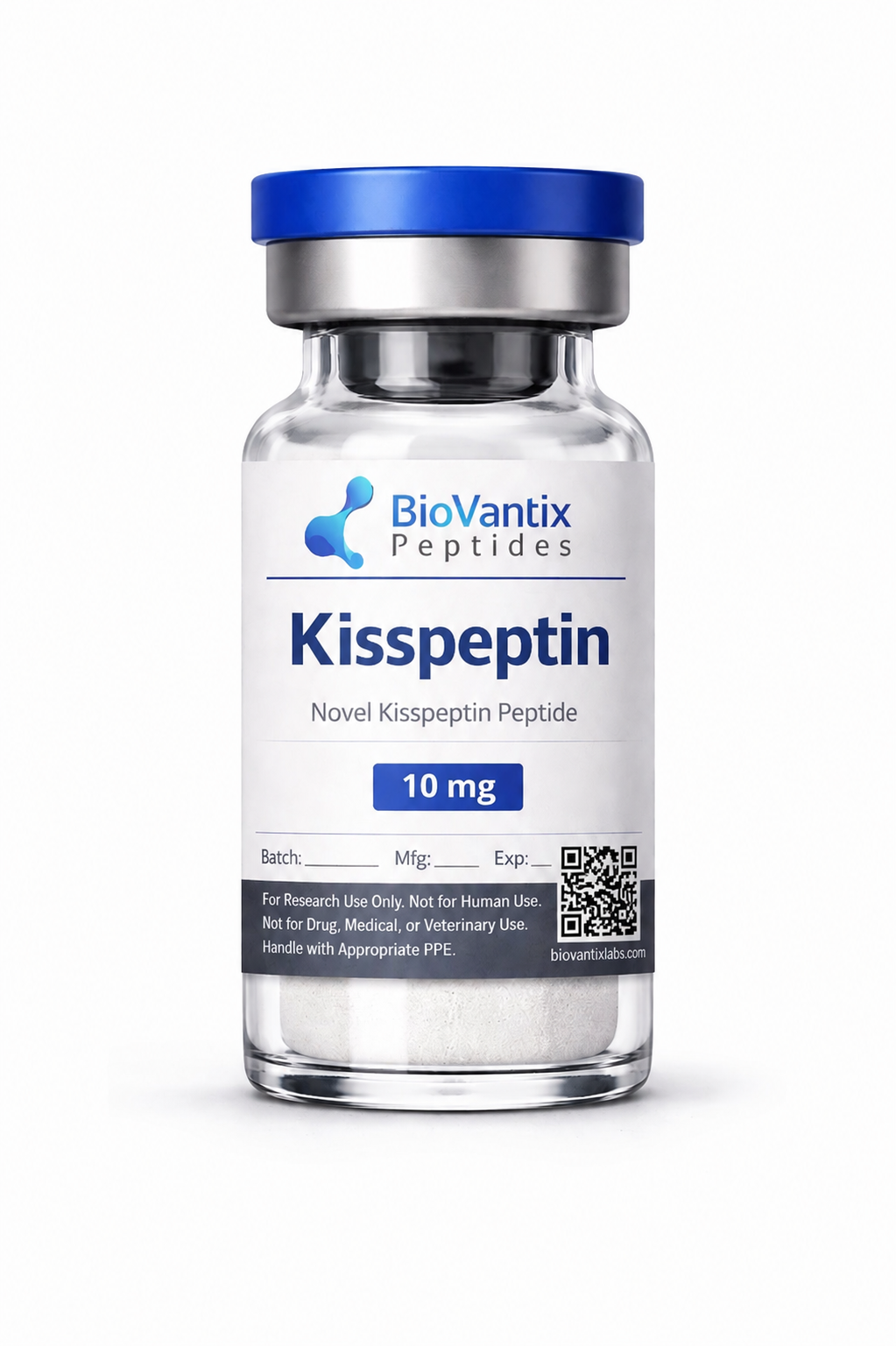
Kisspeptin 10mg
Kisspeptin is an endogenous signaling peptide encoded by the KISS1 gene and is widely studied in reproductive endocrinology and neuroendocrinology. It acts by activating the KISS1 receptor (KISS1R/GPR54), playing a central role in regulating the hypothalamic-pituitary-gonadal (HPG) axis by stimulating the release of gonadotropin-releasing hormone (GnRH).
In scientific research, kisspeptin is used to investigate the regulation of reproductive hormones, the onset and progression of puberty, fertility mechanisms, neuroendocrine communication, and the interaction between metabolic status and reproductive function. Its use is limited to research and development purposes, providing a valuable tool for understanding the physiological processes that regulate reproduction and endocrine homeostasis.
For research use only. Not for human consumption.
$120.00 Original price was: $120.00.$90.00Current price is: $90.00.
Availability: 57 in stock
All Peptides
Popular Peptides
Peptide Blends
Kisspeptin: Overview
Kisspeptin is a naturally occurring peptide that plays a central role in the regulation of reproductive endocrinology. Encoded by the KISS1 gene, kisspeptin primarily functions through activation of the kisspeptin receptor (KISS1R), also known as GPR54, a G protein-coupled receptor expressed in multiple tissues throughout the body. Since the discovery of its role in regulating reproductive hormones, kisspeptin has become a major focus of research in endocrinology, reproductive biology, neuroendocrine signaling, and metabolic research.
Kisspeptin is widely recognized as a key regulator of the hypothalamic-pituitary-gonadal (HPG) axis. By stimulating gonadotropin-releasing hormone (GnRH) neurons, kisspeptin influences the secretion of luteinizing hormone (LH) and follicle-stimulating hormone (FSH), two hormones that are essential for reproductive function. Because of its central role within reproductive signaling networks, kisspeptin has become an important focus of both preclinical and clinical research related to fertility, puberty, sex hormone regulation, and neuroendocrine physiology.
Kisspeptin: Biochemical Characteristics
Kisspeptin refers to a family of peptide fragments derived from the KISS1 precursor protein. The most commonly studied forms include:
- Kisspeptin-54
- Kisspeptin-14
- Kisspeptin-13
- Kisspeptin-10
These peptides share a common C-terminal sequence responsible for receptor activation. Despite differences in peptide length, the biologically active fragments bind to and activate KISS1R with high affinity.
Key biochemical characteristics include:
- Endogenous neuropeptide hormone
- Derived from the KISS1 gene
- Activates the KISS1 receptor (GPR54)
- Functions within hypothalamic neuroendocrine pathways
- Influences gonadotropin secretion
- Participates in reproductive and metabolic signaling
Kisspeptin-producing neurons are primarily located in hypothalamic regions involved in reproductive regulation, including the arcuate nucleus and the anteroventral periventricular nucleus. These neuronal populations integrate hormonal, metabolic, and environmental signals to coordinate reproductive endocrine responses.
Kisspeptin: Research Applications
Kisspeptin research spans multiple scientific disciplines, including endocrinology, reproductive medicine, neuroscience, and metabolism.
Major areas of investigation include:
Reproductive Endocrinology
Kisspeptin is extensively studied as a master regulator of reproductive hormone secretion. Research models examine how kisspeptin signaling influences:
- GnRH release
- LH secretion
- FSH secretion
- Sex steroid production
- Ovarian function
- Testicular function
Fertility Research
Because kisspeptin stimulates endogenous reproductive hormone pathways, researchers continue to investigate its role in fertility-related physiology and reproductive function.
Areas of study include:
- Ovulatory physiology
- Follicular development
- Spermatogenesis
- Reproductive hormone dynamics
- Assisted reproduction models
Puberty and Development
The onset of puberty is closely associated with activation of kisspeptin signaling pathways. Research examines how alterations in KISS1 and KISS1R activity may influence the timing of puberty and developmental endocrinology.
Neuroendocrine Signaling
Kisspeptin neurons integrate information from multiple physiological systems and serve as an important interface between the brain and endocrine organs.
Current research investigates interactions between kisspeptin and:
- Estrogen signaling
- Testosterone signaling
- Leptin pathways
- Neurokinin B
- Dynorphin
- Circadian regulators
Metabolic Research
Emerging evidence suggests that kisspeptin may play a role in metabolic regulation and energy balance physiology. Researchers continue to investigate potential relationships between kisspeptin signaling, nutritional status, body composition, and reproductive function.
:::