

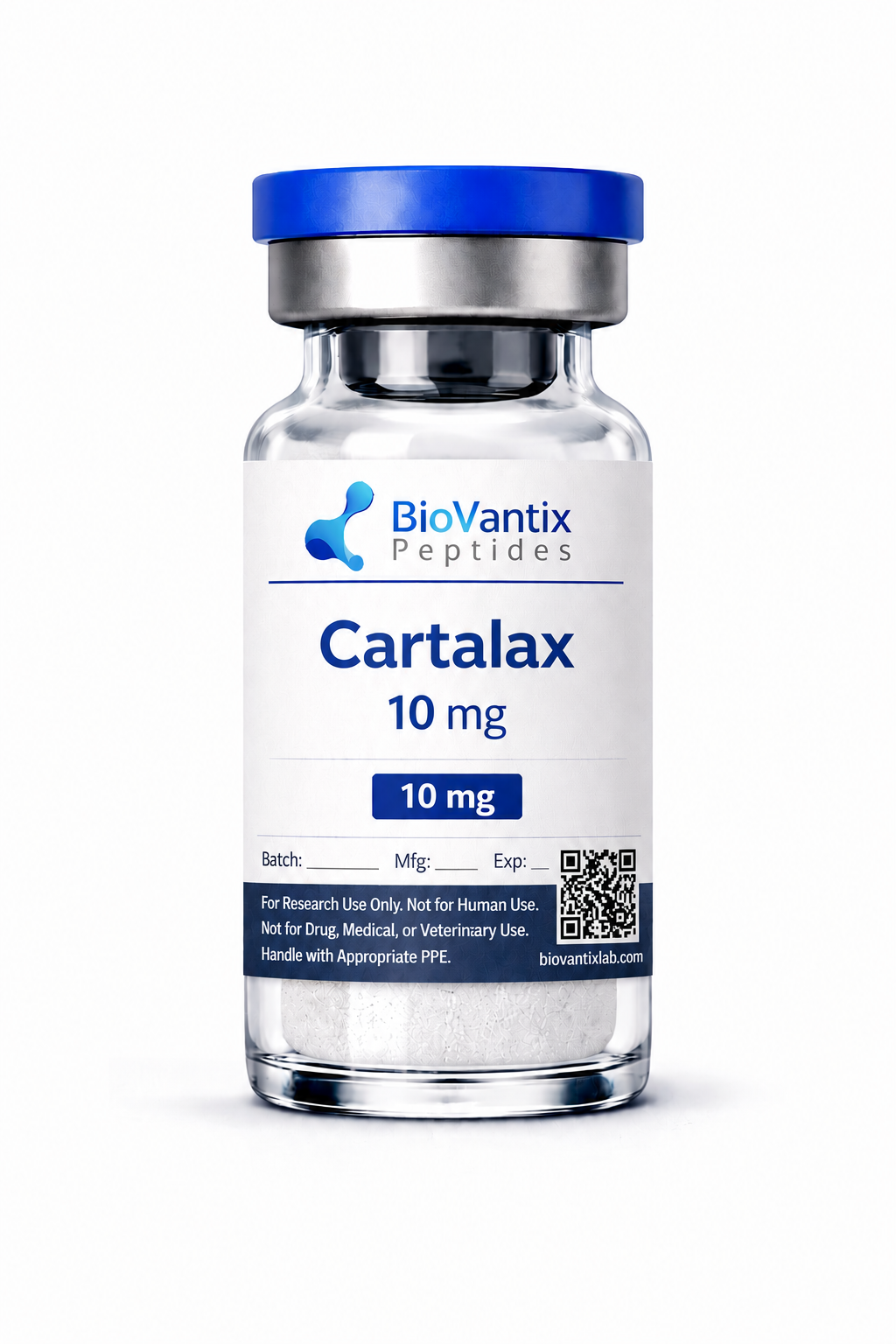
Cartalax 10mg
Cartalax is a synthetic peptide studied in experimental research for its interaction with connective tissue signaling pathways and extracellular matrix regulatory systems. In laboratory models, Cartalax is investigated for its role in cellular communication associated with cartilage, extracellular matrix organization, and peptide-mediated signaling mechanisms, providing researchers with a valuable tool for studying connective tissue biology and extracellular matrix regulation.
For research use only. Not for human consumption.
$115.00 Original price was: $115.00.$80.00Current price is: $80.00.
Availability: 20 in stock
Popular Peptides
Peptide Blends
What Is Cartalax?
Cartalax is a synthetic peptide investigated in experimental research focused on connective tissue biology, extracellular matrix regulation, and cartilage-associated cellular signaling pathways. In laboratory settings, it is studied as a research compound for examining molecular processes related to cartilage structure, tissue maintenance, and peptide-mediated signaling activity.
Research models involving Cartalax frequently focus on its interaction with pathways associated with chondrocyte function, extracellular matrix organization, and connective tissue regulatory mechanisms. Researchers use this peptide to investigate how peptide signaling may influence cellular communication within biological systems related to cartilage.
Across a variety of experimental settings, Cartalax has been associated with measurable changes in parameters commonly monitored in peptide and connective tissue research, including extracellular matrix signaling activity, collagen-associated pathways, and cellular regulatory processes related to cartilage physiology. These observations are interpreted from a mechanistic perspective through peptide-mediated signaling interactions rather than as outcomes or claims of applied use.
Cartalax Structure
Peptide Class: Cartilage-associated synthetic peptide
Peptide Type: Short-chain bioactive peptide complex
Molecular Characteristics: Synthetic peptide formulation used in experimental peptide research
Research Category: Connective tissue and extracellular matrix signaling peptide
Cartalax is investigated in laboratory studies as a peptide compound designed to support the exploration of connective tissue signaling pathways and cartilage-associated molecular processes. The peptide’s structural characteristics are examined in experimental systems to better understand peptide-cell interactions involved in extracellular matrix organization and tissue signaling dynamics.
Researchers use Cartalax in controlled studies to evaluate peptide activity in cellular models associated with cartilage biology, connective tissue signaling, and extracellular matrix regulatory mechanisms.
Cartalax Research
Cartalax is used in experimental research examining connective tissue signaling pathways and extracellular matrix regulation. Laboratory investigations commonly involve cell-based assays designed to evaluate peptide-mediated signaling responses and tissue-associated molecular activity.
Experimental studies frequently investigate endpoints that include:
- extracellular matrix signaling activity
- cartilage-associated cellular pathways
- connective tissue regulatory mechanisms
- collagen-related signaling dynamics
- peptide-mediated cellular communication
- chondrocyte-associated biological processes
In vitro and other experimental model systems are also used to investigate how Cartalax interacts with pathways involved in tissue signaling networks and extracellular matrix organization.
Referenced Citations
-
[1] PubChem – Peptide and Extracellular Matrix Signaling Resources
https://pubchem.ncbi.nlm.nih.gov/“`
[2] Alberts B, Johnson A, Lewis J, et al.
Molecular Biology of the Cell — Extracellular Matrix and Connective Tissue Signaling
https://www.ncbi.nlm.nih.gov/books/[3] Lodish H, Berk A, Kaiser CA, et al.
Molecular Cell Biology — Cell Signaling and Matrix Regulation
https://www.ncbi.nlm.nih.gov/books/[4] National Center for Biotechnology Information (NCBI)
Cartilage Biology and Extracellular Matrix Research Resources
https://www.ncbi.nlm.nih.gov/[5] PubMed
Peptide Signaling and Connective Tissue Research Database
https://pubmed.ncbi.nlm.nih.gov/
“`
Storage Instructions:
All of our products are manufactured using the lyophilization (freeze-drying) process, ensuring they remain 100% stable during shipping for up to 3–4 months.
Once peptides have been reconstituted (mixed with bacteriostatic water), they should be stored in a refrigerator to maintain stability. After reconstitution, peptides generally remain stable for up to 30 days.
Lyophilization is a specialized dehydration process, also known as freeze-drying, in which peptides are first frozen and then exposed to low pressure. This causes the water inside the peptide vial to sublime directly from a solid to a gas, leaving behind a stable, white crystalline structure known as a lyophilized peptide. This white, fluffy powder can be stored at room temperature until it is ready to be reconstituted with bacteriostatic water.
Once your peptides have been received, it is essential to keep them cool and protected from light. If they will be used immediately, or within the next few days, weeks, or months, short-term refrigeration below 4°C (39°F) is generally acceptable. Lyophilized peptides are typically stable at room temperature for several weeks or longer, so if they will be used within a matter of weeks or months, room-temperature storage is generally suitable.
However, for long-term storage (several months to years), peptides should ideally be kept in a freezer at -80°C (-112°F). When storing peptides for extended periods, freezing is the preferred method for preserving peptide stability.
For more information on proper peptide storage techniques, click the following link:
http://biovantixlab.com/peptide-storage/
What Is Cartalax?
Cartalax is a synthetic peptide investigated in experimental research focused on connective tissue biology, extracellular matrix regulation, and cartilage-associated cellular signaling pathways. In laboratory settings, it is studied as a research compound for examining molecular processes related to cartilage structure, tissue maintenance, and peptide-mediated signaling activity.
Research models involving Cartalax frequently focus on its interaction with pathways associated with chondrocyte function, extracellular matrix organization, and connective tissue regulatory mechanisms. Researchers use this peptide to investigate how peptide signaling may influence cellular communication within biological systems related to cartilage.
Across a variety of experimental settings, Cartalax has been associated with measurable changes in parameters commonly monitored in peptide and connective tissue research, including extracellular matrix signaling activity, collagen-associated pathways, and cellular regulatory processes related to cartilage physiology. These observations are interpreted from a mechanistic perspective through peptide-mediated signaling interactions rather than as outcomes or claims of applied use.
Cartalax Structure
Peptide Class: Cartilage-associated synthetic peptide
Peptide Type: Short-chain bioactive peptide complex
Molecular Characteristics: Synthetic peptide formulation used in experimental peptide research
Research Category: Connective tissue and extracellular matrix signaling peptide
Cartalax is investigated in laboratory studies as a peptide compound designed to support the exploration of connective tissue signaling pathways and cartilage-associated molecular processes. The peptide’s structural characteristics are examined in experimental systems to better understand peptide-cell interactions involved in extracellular matrix organization and tissue signaling dynamics.
Researchers use Cartalax in controlled studies to evaluate peptide activity in cellular models associated with cartilage biology, connective tissue signaling, and extracellular matrix regulatory mechanisms.
Cartalax Research
Cartalax is used in experimental research examining connective tissue signaling pathways and extracellular matrix regulation. Laboratory investigations commonly involve cell-based assays designed to evaluate peptide-mediated signaling responses and tissue-associated molecular activity.
Experimental studies frequently investigate endpoints that include:
- extracellular matrix signaling activity
- cartilage-associated cellular pathways
- connective tissue regulatory mechanisms
- collagen-related signaling dynamics
- peptide-mediated cellular communication
- chondrocyte-associated biological processes
In vitro and other experimental model systems are also used to investigate how Cartalax interacts with pathways involved in tissue signaling networks and extracellular matrix organization.
Referenced Citations
-
[1] PubChem – Peptide and Extracellular Matrix Signaling Resources
https://pubchem.ncbi.nlm.nih.gov/“`
[2] Alberts B, Johnson A, Lewis J, et al.
Molecular Biology of the Cell — Extracellular Matrix and Connective Tissue Signaling
https://www.ncbi.nlm.nih.gov/books/[3] Lodish H, Berk A, Kaiser CA, et al.
Molecular Cell Biology — Cell Signaling and Matrix Regulation
https://www.ncbi.nlm.nih.gov/books/[4] National Center for Biotechnology Information (NCBI)
Cartilage Biology and Extracellular Matrix Research Resources
https://www.ncbi.nlm.nih.gov/[5] PubMed
Peptide Signaling and Connective Tissue Research Database
https://pubmed.ncbi.nlm.nih.gov/
“`
Storage Instructions:
All of our products are manufactured using the lyophilization (freeze-drying) process, ensuring that they remain 100% stable during shipping for up to 3–4 months.
Once peptides have been reconstituted (mixed with bacteriostatic water), they should be stored in a refrigerator to maintain stability. After reconstitution, peptides generally remain stable for up to 30 days.
Lyophilization is a specialized dehydration process, also known as freeze-drying, in which peptides are first frozen and then subjected to low pressure. This causes the water inside the peptide vial to sublime directly from a solid to a gas, leaving behind a stable, white crystalline structure known as a lyophilized peptide. This fluffy white powder can be stored at room temperature until it is ready to be reconstituted with bacteriostatic water.
Once your peptides have been received, it is essential to keep them cool and protected from light. If the peptides will be used immediately, or within the next few days, weeks, or months, short-term refrigeration below 4°C (39°F) is generally acceptable. Lyophilized peptides are typically stable at room temperature for several weeks or longer, so if they will be used within a matter of weeks or months, room-temperature storage is generally appropriate.
However, for long-term storage (several months to years), peptides should ideally be kept in a freezer at -80°C (-112°F). When storing peptides for months or even years, freezing is the preferred method for preserving peptide stability.
For more information on proper storage techniques, click the following link:
http://biovantixlab.com/peptide-storage/